

February 2026
Beyond the False Dichotomy: Reframing Colombia’s 2026 Election
Region: Latin America
Author: Julieta Gomez
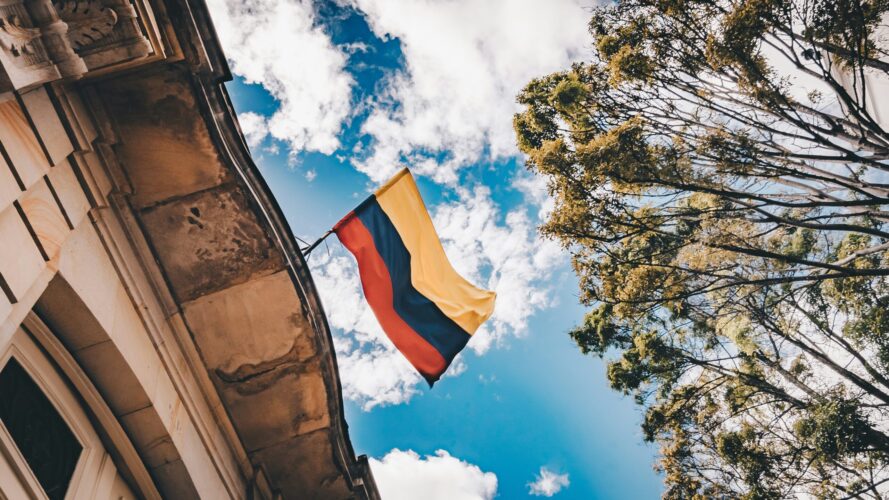
Colombia is entering a pivotal election year amid deep national division.
Colombia is entering a pivotal election year amid deep national division. Public debate has shifted away from substantive policy issues such as public safety, economic stability, healthcare, and institutional reform and toward a negative focus on preventing certain candidates from winning. As a result, there is a real risk of repeating the dynamic of the past two elections, in which many voters were motivated more by opposition to candidates than by genuine support for the ones they chose. That dynamic ultimately led to the election of left-wing President Gustavo Petro on a promise of sweeping “change” that did not materialize.
The outcome has not met expectations. The health system is in crisis, crime has reached alarming levels in several regions, and the government has struggled to secure consistent congressional support, limiting its ability to advance major policy proposals. This piece does not aim to endorse a specific candidate. Rather, it seeks to underscore that these elections are decisive for the country’s future, not because of their immediate personal impact on voters, but because what is at stake is institutional stability, economic direction, and social cohesion.
The false dichotomy created by a polarized country (and why not, a polarized world) has directly led to polling numbers in Colombia where the two leading candidates are on opposite ends of the political spectrum. A false dichotomy occurs when two opposing options are presented as the only possible alternatives, deliberately obscuring intermediate or alternative solutions. As mentioned, if assessed honestly, that definition describes Colombia’s last two electoral cycles. And once again, it defines the moment we are in now.
This dynamic has produced exactly what political extremes seek and thrive on: deeper division. What is worth stating clearly, however, is that neither extreme will resolve the structural challenges the country faces, and much less those fueled by rhetoric rooted in division and confrontation because when politics becomes a contest between perceived enemies, compromise becomes weakness, dialogue becomes suspect, and governing becomes harder.
Polarization has not worked and this is not unique to Colombia. The most significant failure of recent politics, both in Colombia and in other democracies, has been the radicalization of public debate. Consider the United States: what has sustained political hostility produced? Legislative gridlock (government shutdown), institutional distrust, and a population increasingly worn out by constant conflict.
Why should we assume that in Colombia, the same model will yield different results? The evidence suggests otherwise. It is difficult to argue that the quality of public debate has improved or that the country’s structural conditions have meaningfully strengthened because of this persistent dynamic of confrontation. Polarization has not generated greater prosperity, stronger social cohesion, or higher levels of institutional trust. Instead, it has narrowed the political space and reduced complex national challenges to ideological slogans.
Colombia has capable, experienced, and well-prepared individuals who could lead the country. Many choose not to pursue the presidency because they understand not only the political risk, but also the institutional responsibility that governing entails. Still, alternatives remain. There are candidates with proven track records of delivering results will in public service. So why have we reduced the debate to a binary contest defined solely by “voting to prevent the other side from winning”? The presidential election has been reduced to immediate economic fear, in a country that urgently needs responsible leadership, institutional seriousness, and managerial competence.
This is why we should appeal to a broader sense of civic responsibility. Let us not resign ourselves to an election defined by extremes. Let us examine proposals carefully. Let us evaluate government plans rigorously. Let us think strategically about our votes for Congress and for coalition primaries. Let us define clearly what kind of country we want and what kind of leadership this moment demands.
Do not assume that polarization is inevitable or irreversible. In the first round, voters can support candidates who offer coherent ideas, substantive platforms, and viable policy proposals even if they are not the loudest voices in the room. That way, the runoff will present genuine alternatives capable of unifying the country rather than deepening its divisions.
Although this reflection concerns Colombia’s upcoming elections, the underlying lesson extends beyond one country. Democracies weaken when citizens accept false choices. Moving beyond the false dichotomy requires intellectual discipline and civic responsibility. We must actively seek the best outcomes, not just good alternatives.